In the agency world, we often ask clients to perform a high-stakes act of faith: commit your budget and vision to a development team before you’ve seen a single functional screen of your product.
On a recent sales call, Isaac, a key member of our sales team here at Rubico, did something that, only a year ago, would have sounded impossible. Instead of walking a prospect through a static discovery document and asking them to imagine the final product, he opened Lovable and built a working project workflow live, in under an hour, while the prospect watched.
Shortly thereafter, a contract was signed.
We sat down with Isaac to talk about how “vibe coding” is closing the gap between the pitch and the product, and where the “vibe” eventually needs to meet reality.
Moving from “Trust Me” to “Look at This”
It’s long been the unfortunate (but necessary) standard in software development to ask clients to commit before they can tangibly see the product. But talking about a tool isn’t the same as interacting with it.
“There are so many moving pieces to sales, it’s easy to get lost in the details,” Isaac explains. He’d been trying to solve this with traditional CRMs like HubSpot, but tracking data didn’t solve the core problem: visuals. What was missing was a way to make the conversation visual and establish trust, both for the client and for the internal team picking up the deal.
Enter, vibe coding.
What “Vibe Coding” Actually Means
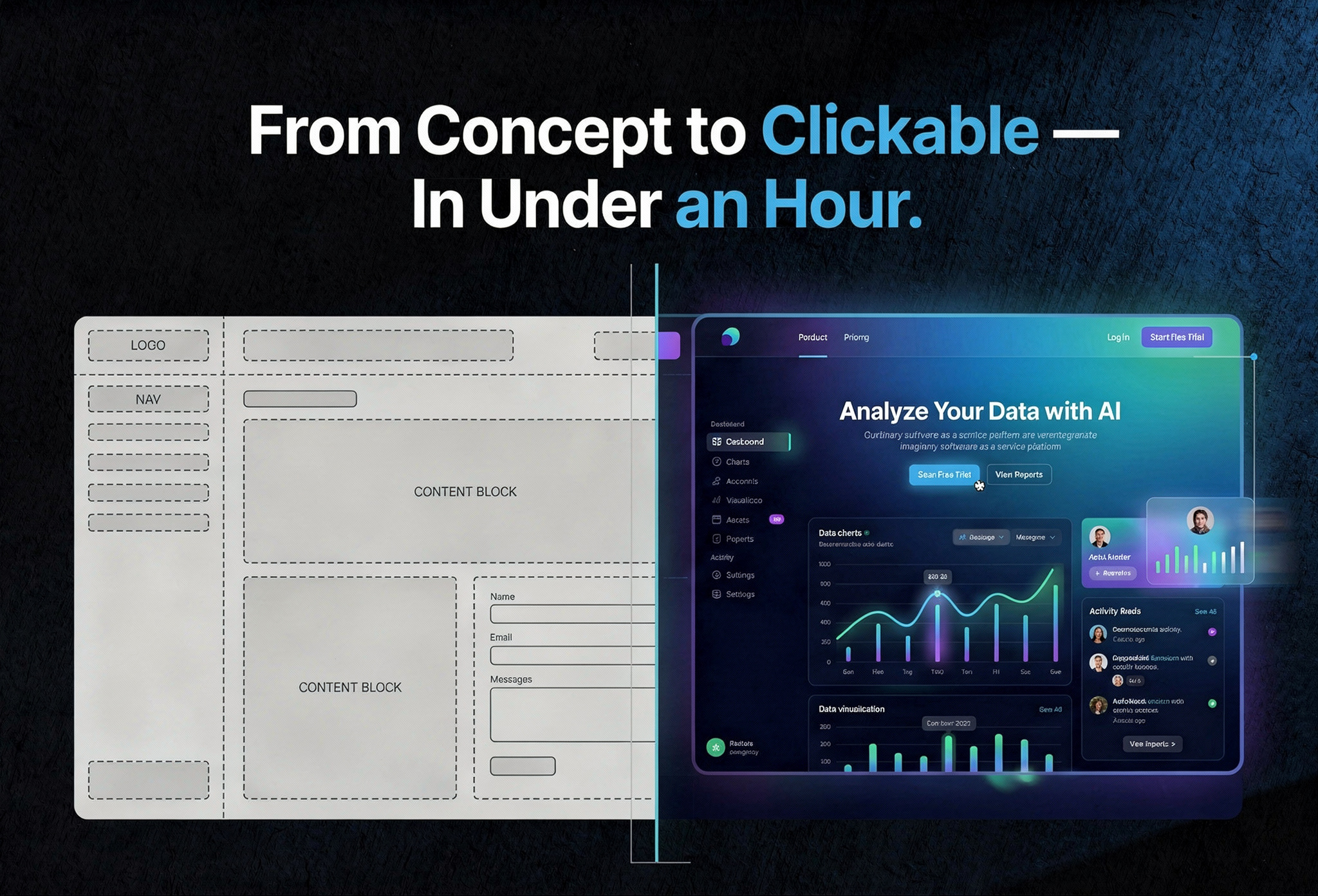
“Without any technical experience, you can use your words and ideas to build a basic application.”
Tools like Lovable take a natural language prompt and produce a working prototype; not a mockup or a wireframe, but an actual live link. For a sales conversation, this is a big shift.
A flat Figma wireframe or a PDF deck may look nice, but it will never feel like a website. A live prototype that a client can open on their own phone (and click through) changes the psychology of the meeting. It’s the difference between showing someone a drawing of a car vs. letting them sit in the driver’s seat before they buy. Pretty different experience there.
From Discovery Document to Discovery Build

The most impactful surprise for our team was Lovable’s planning phase. Traditionally, discovery was a meeting that produced a document. Now, it’s a meeting that produces a working artifact.
- Real-Time Scoping: Lovable helps scope ideas and analyze risks before the build starts. “The planning phase is basically our discovery phase,” says Isaac.
- The Technical North Star: These prototypes give our development team a visual guide when they take over. It reduces the friction of “translating” a client’s ideas into technical and visual requirements.
- The Founder’s Head Start: For a founder with an idea, this gets the concept out of their head and onto a screen. It gives them a tangible head start to bring to a professional team like Rubico.
The Vibe Ceiling: Where Prototypes Stop Being Products
As powerful as vibe coding is for closing a deal, Isaac will be the first to admit it isn’t a magic wand. “It’s a great place to start, but it shouldn’t end there.” When trying to turn a “vibe” into a sustainable business, you eventually hit a technical ceiling, likely involving one of the three following constraints:
1. The Security Gap
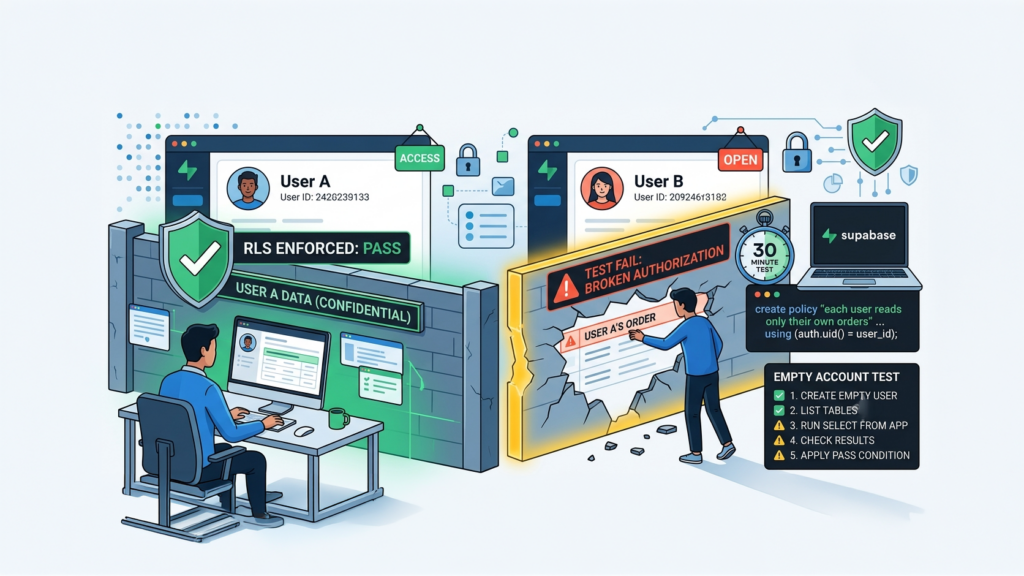
AI-generated code often prioritizes “Does it work?” over “Is it safe?” It is not uncommon for us to see vibe-coded projects with API keys hardcoded in client-side bundles, missing input validation, or permissive database rules that expose user data. Without a human developer auditing the architecture, these aren’t just risks, they’re defaults.
2. Scalability and Data Architecture
A prototype that works for one user often breaks under meaningful traffic. If you lack a developer mindset, you’ll lack a foundational level of organization in your codebase. Managing complex backends, data migrations, and proper modeling still requires professional engineering to prevent the app from hitting a hard ceiling.
3. The “Same Vibe” Aesthetic
As you’ve likely noticed if you’ve spent any amount of time toying with vibe coding software, AI prototyping tools tend to default to a specific visual style—similar fonts, gradients, and component patterns. Once you know it, you can’t unsee it, and we’re beginning to see the common design tells across many websites and apps.
Right now, these AI tools are new enough that their fingerprints are most recognizable to those in-industry. But they will quickly become apparent to retail customers, which risks the perception of your product’s quality and reliability. Professional-grade software requires a level of custom UX/UI and brand polish that is tailored to a specific market, not just whatever the AI model produces by default.
Scaling the Vibe with Rubico
At Rubico, we use vibe coding exactly how Isaac used it on the call: to compress the distance between an idea and a tangible concept. We want our prospects to see exactly what they are signing up for. But the real building? That’s still all us.
That’s why our real value comes after the “Yes.” We help you architect any prototypes properly so that when you outgrow the initial “vibe,” you have a secure, scalable, and professional codebase ready for the market. We use AI to move faster, but our code is always driven by humans, not machines.
If you have an idea you want to see in action, let’s build a concept together—and then build that concept to last.